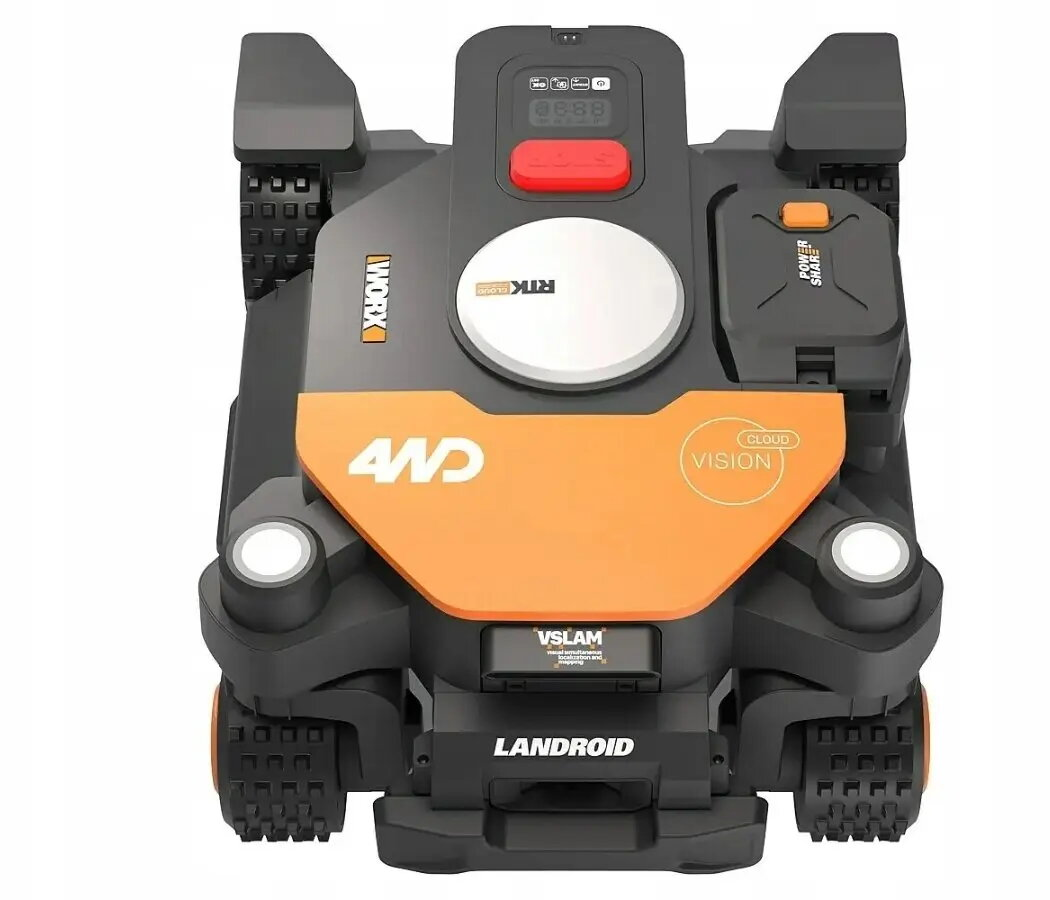
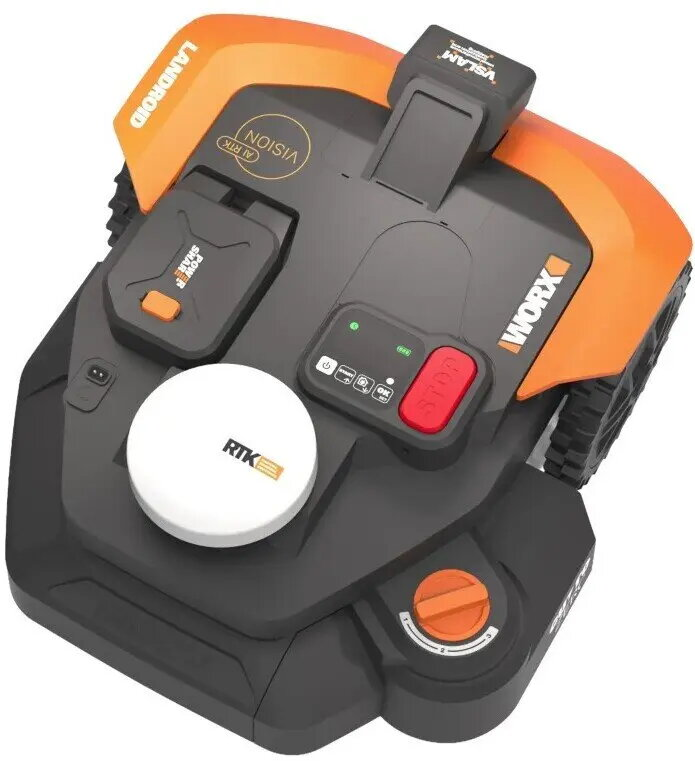
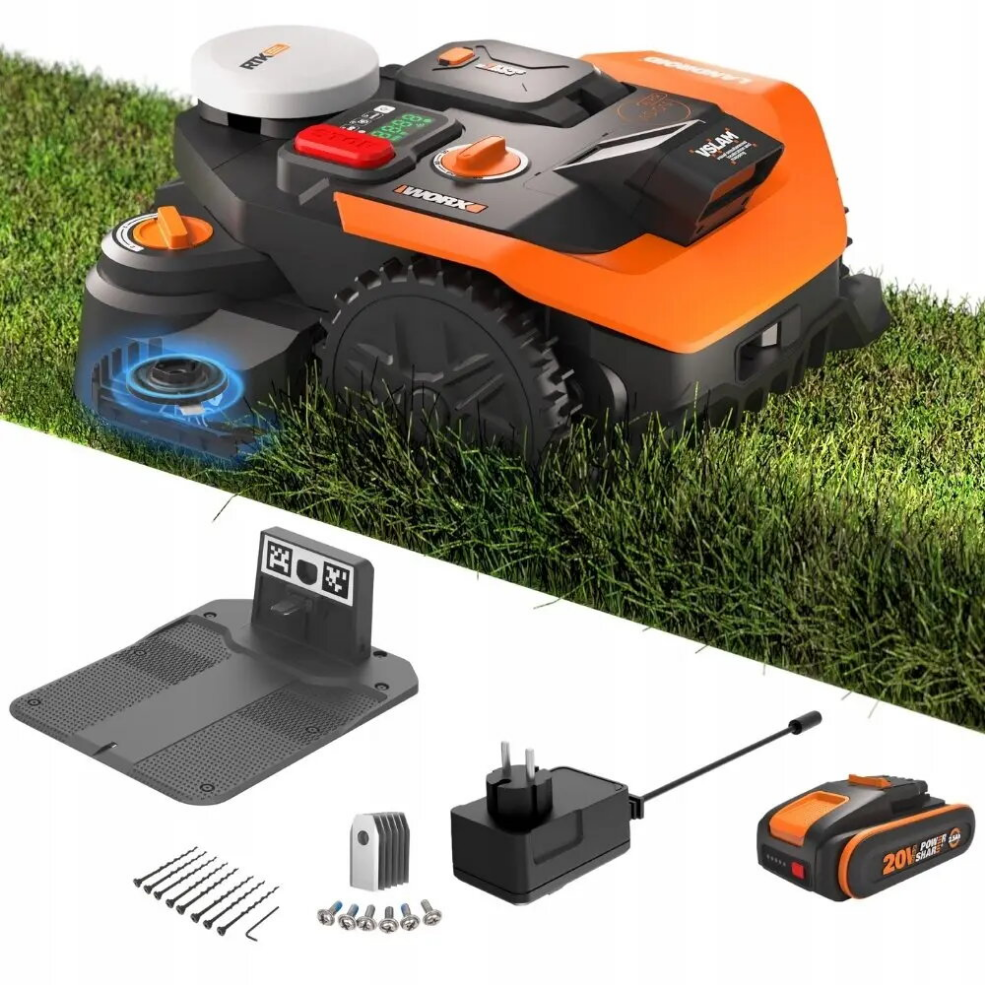
Robot lawn mower WORX Landroid Vision Cloud WR340E for up to 600 m², 4WD, stereo camera, RTK

SKU: 12086545

Apple Shopping Event

Hurry and get discounts on all Apple devices up to 20%

Sale_coupon_20

Original price was: 1.556,99 €.Current price is: 1.292,99 €.

  • Free shipping €100
  • 30 day return
  • Warranty 1 year

Description

WORX Landroid Vision Cloud WR340E is an autonomous robot lawn mower engineered for lawns up to 600 m². The unit combines four-wheel drive (4WD) traction, a stereo camera system for visual navigation and obstacle detection, and RTK support for precise positioning. Designed for regular grass maintenance in residential gardens and small yards, the mower operates within user-defined boundaries and returns to its charging station automatically when required.

Advantages

The four-wheel drive drivetrain improves traction and stability on slopes and uneven terrain, while the stereo camera enables visual obstacle recognition to reduce collisions and interruptions. RTK positioning increases navigational accuracy for more consistent cutting patterns. Cloud connectivity allows remote status monitoring and job scheduling, and the compact autonomous design reduces manual mowing time.

Suitable for

  • Maintaining small to medium residential lawns up to 600 m²
  • Yards with mixed terrain where improved traction is beneficial
  • Regular automated grass trimming to keep lawn height consistent
  • Gardens where obstacle detection and visual navigation reduce manual intervention

Key specifications

  • Maximum recommended lawn area: up to 600 m²
  • Drive type: four-wheel drive (4WD)
  • Navigation: stereo camera visual system with obstacle detection
  • Positioning: RTK support for enhanced accuracy
  • Operation: autonomous with return-to-charge function
  • Connectivity: cloud-enabled for scheduling and monitoring

How to use

Install the perimeter boundary according to the manufacturer’s guidelines to define the working area. Position the charging station on a level surface with access to mains power and ensure the robot can freely reach it. Configure the mower via the cloud interface or onboard controls: set lawn area parameters, cutting schedule, and boundary exceptions. Place the mower in the working area and start an initial mapping and calibration run so the stereo camera and RTK system learn the environment. Monitor initial runs to verify obstacle responses and adjust settings as needed. Allow routine autonomous operation; the mower will return to charge when battery levels require it.

Usage recommendations

For consistent results, maintain clear boundary wiring and keep large obstacles and loose debris removed from the lawn. Use regular cutting schedules appropriate for grass growth rates and check the cutting blades and wheels periodically for wear. In areas with dense tree cover or reflective surfaces, verify visual navigation performance during the first few runs and update settings to optimize obstacle detection. Follow local safety guidelines when operating autonomous equipment.

Overview